F1’s Cinematic Shift: How Formula 1 Is Redefining the European Sports Business
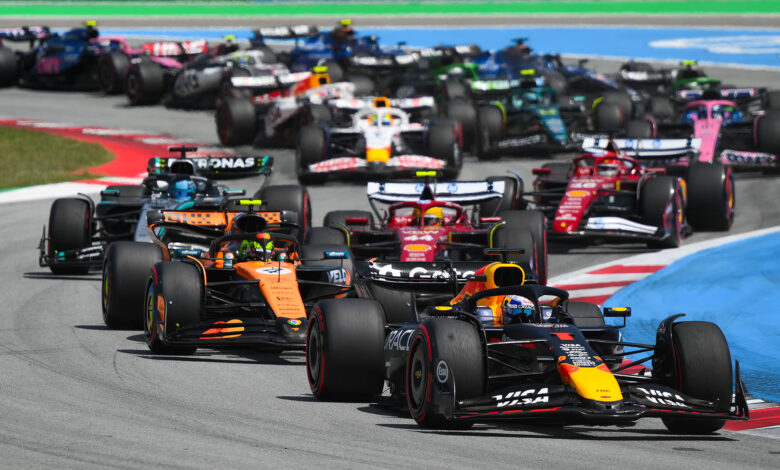

Formula 1 has always been a sport of finesse—milliseconds separating winners and losers, engineering and instinct balancing on the periphery of control. But over the last few years, the sport has hit high gear. It is no longer just about pole positions and constructors’ points. Rather, it has become a cinematic, media-conscious heavy-hitter, transforming speed into spectacle and fans into shoppers of a year-long entertainment product.
That development became crisp into focus with the appearance of F1: The Movie, a Hollywood feature starring Brad Pitt that planted itself comfortably in the actual F1 calendar. Featuring a fictional team, real drivers, and live footage from actual race weekends, the film collapses the line between narrative and reality. As an F1 fanatic, seeing the Sonny Hayes story unfold alongside recognizable tracks and paddock environments didn’t merely feel like immersion—it was like watching Formula 1 validate what many of us already knew: the sport is no longer merely racing; it is a carefully crafted international media phenomenon.
Under Liberty Media’s acquisition of Formula 1 in 2017 for $4.4 billion, the evolution has been both calculated and ruthless. Where once F1’s value was rooted in heritage and exclusivity, the current model leverages accessibility, emotion, and digital storytelling. The business play is clear—create a media ecosystem that doesn’t rely solely on race weekends, but rather one that generates engagement year-round. Shows like Netflix’s Drive to Survive were the initial driver of this transformation, providing fans with access to the inner lives of drivers and teams, and redefining the sport in terms of character and drama. The Brad Pitt film merely continues that trend by incorporating fiction into the actual ecosystem of the sport.
This model is working. Formula 1 produced over $3.2 billion in revenue in 2023, and United States viewership has consistently improved, with ESPN claiming an average audience of over 1.1 million per race. Its popularity among Gen Z viewers, especially in North America, has been credited not to appreciation for the technicalities of the sport’s complexity but to the narrative structures that make the sport humanized. F1 drivers are now global stars; teams are brands; and the races themselves are live instalments in an ever-changing drama.
The commercialization extends beyond the television screen. The racing calendar now features high-glamour, high-revenue events such as the Las Vegas Grand Prix, created as much as for its entertainment appeal as for competitive racing. Remembering Daniel Ricciardo during the Las Vegas GP has turned into a ritual. Every racing weekend is now a cultural event, complete with concerts, celebrity guest appearances, and high-end sponsorships. Sponsorships with such brands as Aramco, AWS, and Puma go well beyond basic advertising—they’re woven into the infrastructure and fabric of the sport. Even Apex GP, as fictional as it is, is potential IP that can be made money from in terms of merchandise, digital extensions, or even future media properties.
To certain purists, this development will be an abdication of F1’s early spirit. But in the new sports economy, narrative is what sustains. Formula 1 has realized that the battle for attention is not about quick cars alone. It’s about myth-making, characters, and a narrative that unfolds beyond the grid. Other European sports—that are traditional to a fault but also resistant to change—are already taking note of F1’s path. Football, rugby, and cycling competitions are likewise looking at similar
combinations of back-stage access, movie promotion, and online growth. Formula 1, as it seems, is the template for taking an heritage sport and making it a modern-day international media property.
What makes this shift so remarkable is how it upholds the essence of the sport while altering its presentation. The engineering prowess, strategic tension, and bodily danger are still at the core. But now, they are strategically packaged, made visible to larger audiences, and monetized through platforms. It’s no longer merely a matter of who crosses the line—it’s who captures imaginations, loyalty, and screen time.
As a business student and Formula 1 enthusiast, I am excited about this change. It mirrors the direction sports today have to head—towards transmedia storytelling, branding IP generation, and emotional engagement. Formula 1 no longer has its story limited to 20 drivers and 24 races. It exists in docuseries, highlight reels, feature films, and social media. It’s in merchandise, online content, and more and more, in the popular awareness of fans who might never have seen a race from beginning to end, but are deeply invested in the story.
With F1: The Movie, Formula 1 has entered its next era—not only as sport, but as a movie business model. And, in the process, it’s redefining success in the international sports economy. For us who used to watch for the rush of the track, it’s surreal and breathtaking to see. The feeling is still present—but now it’s supported by a playbook that’s just as quick, just as accurate, and infinitely more lucrative.