Ashok Lama on Why Restaurants Are Adopting AWS and AI-Driven Operations
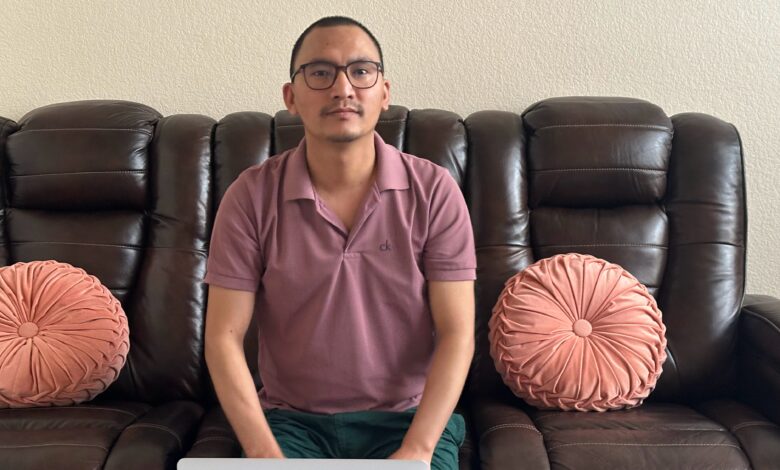

In the restaurant industry, restaurants are increasingly adopting AWS and AI for improved efficiency, speed, and customer experience. For software engineer Ashok Lama, specializing in AWS cloud computing, AI, and machine learning, these technologies are at the heart of his work. His contributions to AI-driven restaurant operations demonstrate how technology can improve customer experience while delivering measurable business value.
Ashok’s work on the Restaurant Order Management project reflects this approach. He designed AI-powered infrastructure solutions that improved order processing efficiency by analyzing historical order data and predicting peak service times. These predictions enabled restaurants to optimize staffing and inventory, reducing wait times and ensuring popular menu items were consistently available. The integration of these AI solutions has positioned the restaurant to better meet customer demands and adapt to changing trends in the food service industry.
The impact of these solutions has been noteworthy. Ashok’s machine learning algorithms, which analyze customer behaviour and order history, have driven a 20% increase in repeat orders by providing personalized recommendations. This personalization not only enhanced the dining experience but also built customer loyalty. On the operational side, predictive analytics allowed restaurants to allocate staff more effectively and ensure that essential ingredients were in stock during peak times, creating a smoother service flow.
Beyond AI integration, Ashok has led key technology upgrades, including the migration of legacy systems to AWS, resulting in a 30% reduction in operational costs. This move from on-premises infrastructure to AWS provided scalable computing resources and improved system reliability. Using AWS services like EC2 for compute power and S3 for storage, restaurants were able to streamline operations and enhance system reliability.
Ashok has also developed customer-facing tools, including an AI-driven chatbot that uses natural language processing to address common inquiries and support requests. This chatbot cut customer response times by 50%, enabling human agents to focus on more complex cases. The result was faster service, improved customer satisfaction, and increased efficiency for support teams.
The measurable results of his work include a 66% reduction in order processing time by streamlining workflows and automating parts of the fulfilment process. Combined with AWS migration savings and AI-driven recommendations, these improvements have strengthened both operational performance and customer service.
Implementing these changes was not without challenges. One of the biggest hurdles was integrating AI models into the existing cloud infrastructure. Ashok addressed this through close collaboration with cross-functional teams, ensuring compatibility and seamless deployment. Another challenge was maintaining data quality for machine learning models. He developed robust data validation and cleaning protocols, which improved model accuracy and performance, laying the groundwork for future AI initiatives in the organization.
Although Ashok has not published in external journals, he has contributed extensively to internal documentation on best practices for deploying AI models on AWS. These materials cover performance optimization, scalability, and security, and include case studies showing how AI-
driven cloud solutions have improved restaurant operations. This knowledge sharing has helped build a stronger technical base within his organization.
Looking at the current trends, Ashok sees automation, AI-driven systems enhancing efficiency and self-management and edge computing as central to the future of restaurant operations. He believes that AI-driven systems will increasingly manage operations with minimal human intervention, while edge computing will enable real-time processing for IoT-connected devices in kitchens and dining areas. He also highlights the growing importance of AI-powered security measures, including zero-trust models and quantum encryption, to safeguard data and infrastructure.
For Ashok, the combination of AWS and AI is not just about technology adoption—it’s about operational transformation. By embedding predictive analytics, automation, and customer personalization into core restaurant systems, he has shown how cloud and AI technologies can work together to improve efficiency, reduce costs, and enhance the customer experience in the ever-evolving landscape.