Expert in AI-Powered Data Processing and Privacy-First Automation Solutions for Medical Education Analytics
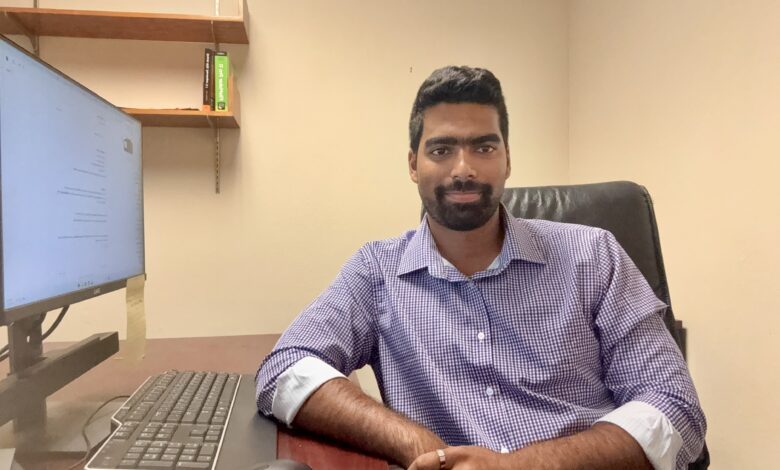

In the modern field of medical education, data is now at the frontline of quality, compliance, and continuous quality improvement. However the high student performance records, their assessment metrics and accreditation standards tend to outweigh the traditional manual process. Institutions have to struggle with disjoined data and consequently have to follow stringent privacy rules like HIPAA and FERPA. As more and more, processing of data and the conduct of privacy-first automation is powered by AI, its role in streamlining workflow, fortifying regulatory adherence, and empowering leaders to make accurate decisions at the right time and place is becoming paramount. Not only are these technologies helping to make us more efficient, but they are also demonstrating how medical schools can define and examine information and what actions they can take next to guarantee precision and legitimacy in the growing demanding climate. It is within this arena that Rohit Reddy Chananagari Prabhakar has stamped his mark as one of the main innovators. Having built AI enabled solutions to solve education analytics challenges previously; he has a proven track record of simplifying tricky and manual data problems to automated systems. Among his accomplishments is the establishment of automated pipelines that cut down manual reporting time and registration time by almost 80 percent, empirically saving hundreds of work hours per year, and also making the process more compliant with the accreditation standards. With a combination of both the technical know-how and an in-depth knowledge of the requirements of the users, he has been successful at bringing the faculty, administrators and advanced technology to the same level, and this has left a physical impact on the effectiveness of academic organization.
His contributions extend across several critical fronts. He has developed intelligent pipelines that clean and standardize fragmented evaluation and performance data, making it analytics-ready in record time. By introducing dashboards with role-based access and real-time insights, he has given decision-makers the ability to identify gaps, track compliance, and act quickly on student performance trends. Furthermore, his use of natural language processing to align assessment items with learning objectives has introduced a new level of accuracy and efficiency in curriculum validation—an area that had long been mired in manual, subjective processes. Importantly, every solution he has built integrates privacy-by-design principles, ensuring sensitive student data remains secure without limiting accessibility for stakeholders who rely on it.
His work has had an immeasurable and transformative influence. In addition to the cost savings and efficiency improvements, his dashboards and automated systems have more than doubled adoption rates among faculty and administrators into a culture of data-driven decision making in an environment where an expertise in technical capability is not frequently present. His tools have not only shortened reporting cycles, it has helped institutions as well to remain compliant throughout the accreditation reviews with less corrective action indicated. Through integrating data privacy and automation to the very essence of analytics, he has fortified the departmental trust and facilitated the more seamless collaboration between academic and administrative groups. Looking ahead, Rohit emphasizes that the future of medical education analytics lies in creating systems that are both proactive and intuitive. Self-updating dashboards, semantic mapping of curricula, and AI copilots
for faculty are trends he sees shaping the next era of education technology. Yet, he is quick to note that innovation cannot come at the cost of accessibility or security tools must be designed to be user-friendly and privacy-first from the ground up. His work so far not only illustrates what is possible today but also lays a foundation for how medical education can adapt to tomorrow’s challenges with intelligence, security, and confidence.
