Ravi Alluri on How AI-Powered Fraud Detection is Quietly Changing Financial Security
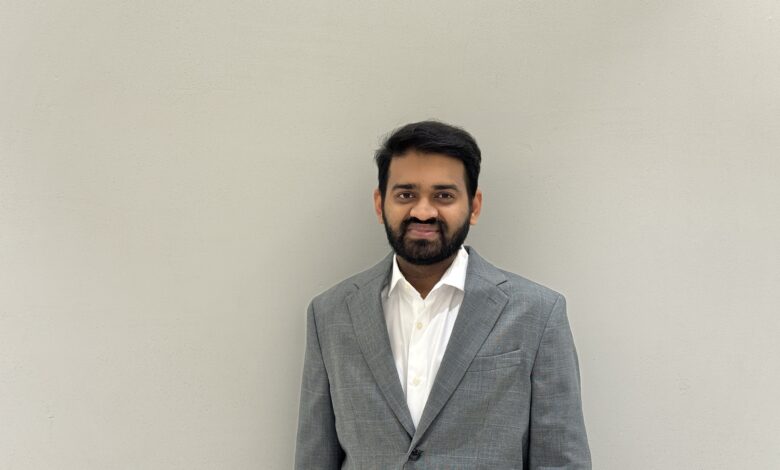

As digital payments become the backbone of everyday commerce, fraudsters are evolving just as fast, if not faster. Armed with sophisticated tools and anonymity at scale, they no longer need to break in through the front door. Instead, they slip through cracks in outdated systems. Visible firewalls and manual reviews can’t keep up. Today, financial security hinges on something smarter: silent, AI-powered systems that detect and defuse threats in real time. These invisible sentinels analyze every transaction in milliseconds, catching what traditional methods miss, all without slowing down the user experience. At the forefront of this quiet revolution is Ravi Kiran Alluri, an architect of some of the most advanced fraud detection systems in the financial technology space. A key force behind AI-driven fraud strategy, Ravi brings a rare combination of deep machine learning expertise and real-world impact. His contributions extend far beyond theory; he has built, scaled, and deployed tools that today protect millions of users from fraud across diverse financial platforms. His most notable achievement is Fraud 360, an enterprise-scale AI fraud detection platform designed to operate across large-scale financial ecosystems. It incorporates specialized machine learning models to detect synthetic identities, prevent account takeovers, and score transactions in real time. “We’re talking about millions of transactions a day, each evaluated in under a second,” he says. “The system doesn’t just flag fraud, it predicts it before damage occurs.” To accomplish this, he pioneered a blend of behavioral biometrics, device fingerprinting, and graph-based detection techniques that map relationships between users, devices, and suspicious behaviors. “We’ve unified detection across different legacy systems without disrupting existing workflows,” he explains. The result is a real-time fraud prevention network that’s both adaptive and invisible, reducing friction for genuine users while stopping malicious activity in its tracks. This work has created a measurable organizational impact. His efforts have significantly lowered financial losses and customer churn, while also enhancing user trust. “By eliminating fraud without interrupting legitimate transactions, we’ve elevated the entire customer experience,” he says. Internally, his fraud case management automation tools have freed up human analysts from repetitive reviews, allowing them to focus on strategic threat analysis. It’s a shift from reactive to proactive defense, and one that has fortified his organisation as a trusted space for consumers. One of his landmark external projects involved building a model using the European cardholder dataset, where fraud cases made up just 0.17% of over 284,000 transactions. The challenge of extreme class imbalance was tackled through innovative ensemble learning models and SMOTE oversampling techniques. “Precision mattered more than anything,” he reflects. “A false positive could block a real customer; a false negative could mean financial loss. We had to get it right.” That project laid the foundation for advanced detection capabilities now standard in enterprise systems. But building such systems is not without challenges. He had to overcome significant technical and structural hurdles. Real-time response times, often under 100 milliseconds, demanded robust streaming architectures. Meanwhile, constantly evolving fraud tactics required models to retrain continuously while detecting feature drift. “It’s not enough to build a system once. You have to teach it how to learn on its own,” he explains. His work in adaptive learning systems has proven crucial to keeping pace with emerging fraud patterns. The future, he believes, lies in expanding the scope and intelligence of fraud detection systems. “We’re starting to see graph neural networks and NLP being applied to uncover fraud rings and phishing scams,” he notes. “These systems can now interpret relationships and understand language cues, things that were impossible just a few years ago.” According to him, such advancements could detect sophisticated social engineering attacks that no transaction-level model could catch on its own. His academic and professional contributions further cement his authority in the space. His publications—Detecting Synthetic Identity Fraud via Multimodal Customer Data Integration and Synthetic Data Generation for Enhancing Fraud Detection ML Model Training—offer technical insights into some of the most pressing challenges in AI-driven fraud prevention. As financial fraud becomes more complex and elusive, Ravi reminds us that the solution isn’t just smarter tools; it’s smarter thinking. “AI-powered fraud detection isn’t a plug-and-play fix. It’s a living system, you have to feed it, teach it, and trust it,” he says. The real breakthroughs happen when data isn’t locked in silos, but shared across teams with a unified purpose. For organizations ready to move beyond reactive defense, he offers a clear path forward: build for adaptability, invest in collaboration, and make innovation part of the company’s DNA. Because in the end, protecting the future of finance means thinking like the future, before the fraudsters do.
